
How Grimsel Hydro is developing its processes holistically
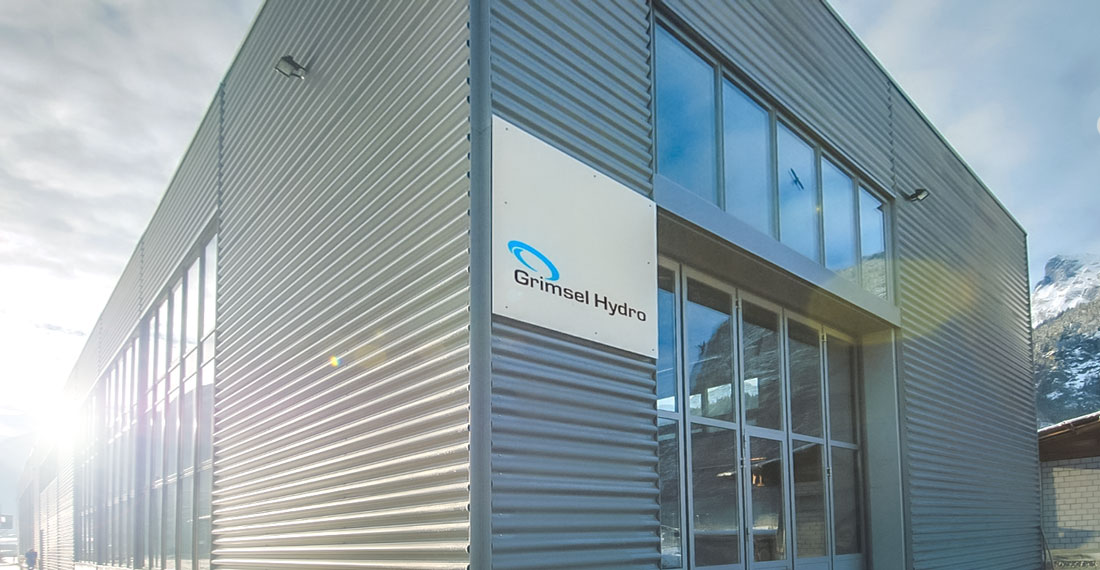 Grimsel Hydro is the label used by Kraftwerke Oberhasli AG to bundle the external services of its hydropower technology centre.
Source: grimselhydro.ch
Grimsel Hydro is the label used by Kraftwerke Oberhasli AG to bundle the external services of its hydropower technology centre.
Source: grimselhydro.ch
For more than 101 years, Kraftwerke Oberhasli AG has been generating electricity from hydropower, making it one of Switzerland’s long-established energy companies. Embedded in the alpine landscape of the Grimsel region, its facilities make an important contribution to sustainable energy supply and to the stability of the power grid. The topographical and climatic conditions place high demands on operation and maintenance – while at the same time making hydropower a particularly valuable resource in this region.
In addition to generating electricity, the company is active in other areas. Its own hotel operations, tourist offerings and guided tours provide insights into the world of hydropower while strengthening its regional roots. This combination of energy production, services and tourism brings with it complex operational requirements.
Grimsel Hydro is a central element in this context. Under this name, Kraftwerke Oberhasli AG brings together its expertise in maintenance, manufacturing and technical support – both for its own facilities and for external customers.
In-house maintenance as a strategic step
The development of in-house maintenance began in the 1970s. The goal was to become less dependent on external service providers and to secure technical expertise within the company over the long term. Over the decades, the workshop has been continuously expanded and professionalised.
Today, Grimsel Hydro employs around 50 people and covers a broad range of services – from maintenance and repairs to the production of complex mechanical components.

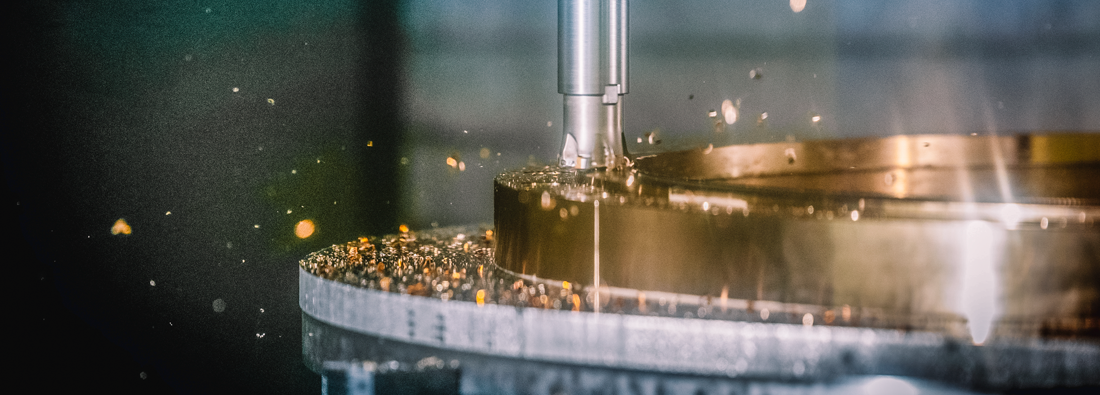 Close-up from manufacturing at Grimsel Hydro: precision and experience are essential for maintaining hydropower facilities.
Source: KWO
Close-up from manufacturing at Grimsel Hydro: precision and experience are essential for maintaining hydropower facilities.
Source: KWO
More efficient processes through centralised procurement
As maintenance continued to develop, the organisation of procurement also came into focus. The previous collaboration with several suppliers involved a high level of coordination and made clear structures more difficult.
With the introduction of single sourcing in the field of machine tools, this process was deliberately simplified. Today, procurement is handled centrally through Brütsch/Rüegger Tools. “In the past, I had several contacts for different products. Today, I have one contact person and one invoice issuer. That has simplified many things – both administratively and in terms of advice,” says Marcel Dörr.
A good example of this collaboration is the shoe fitting room at KWO. Instead of ordering safety shoes in the traditional way, employees use a consignment stock with various models. The shoes are provided by Brütsch/Rüegger Tools, but are only invoiced once an employee has actually chosen a specific model.
“Employees can test different models directly on site and choose the one that really fits,” says Reto Krebs, Head of Purchasing at Kraftwerke Oberhasli AG. “This is a huge relief in everyday work.”
This system not only makes procurement more efficient, but also improves occupational safety and everyday comfort.
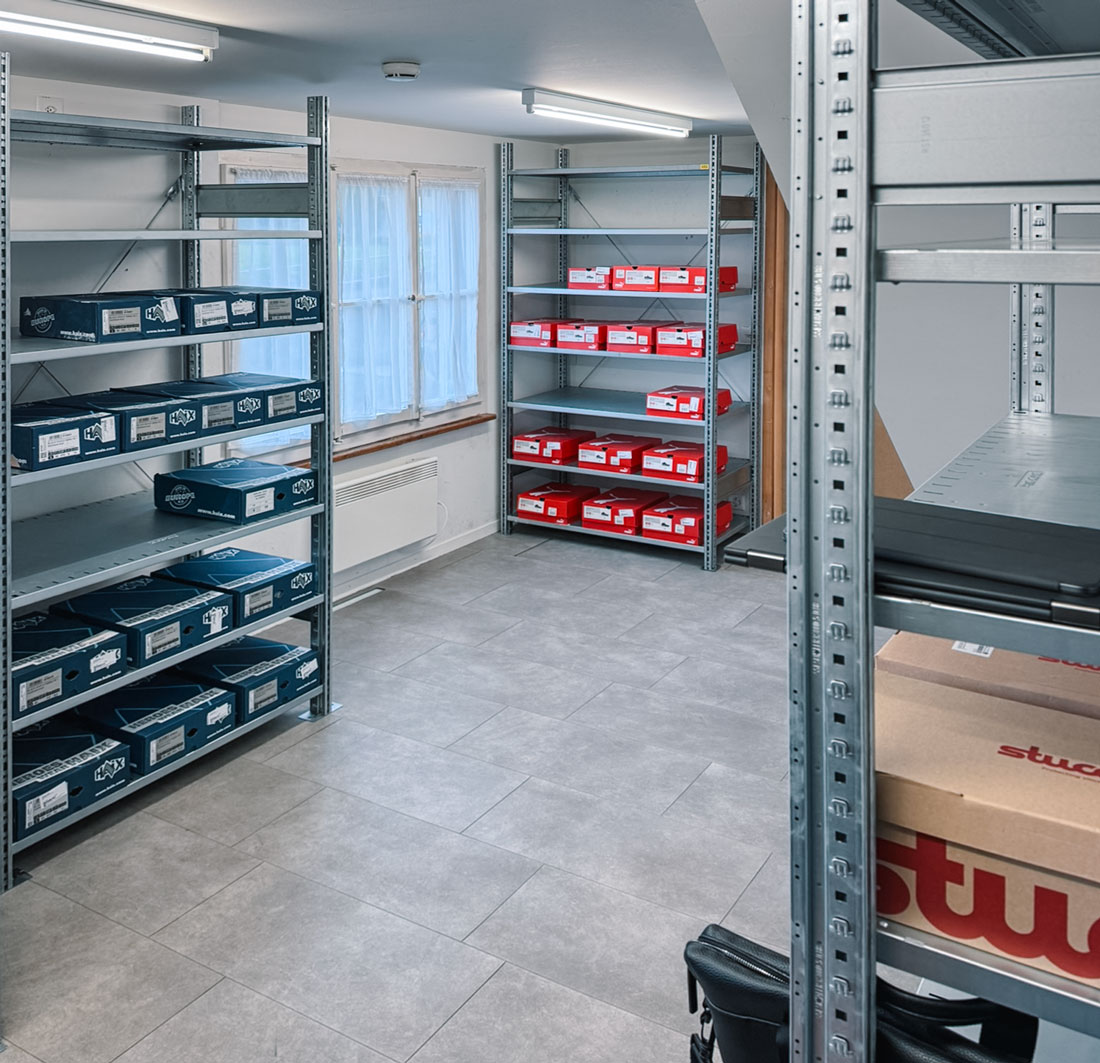 Shoe fitting room at KWO.
Source: Brütsch/Rüegger Tools
Shoe fitting room at KWO.
Source: Brütsch/Rüegger Tools
From procurement to holistic process optimisation
Following procurement, Grimsel Hydro is now taking a closer look at its internal material and goods flows. “We deliberately looked at the entire process – from ordering through to use in the workshop,” explains Reto Krebs. “It is not just about individual steps, but about how all processes interact.”
The analysis showed that historically grown structures, different storage locations and a lack of transparency in material movements offer potential for optimisation. The aim is to structure goods flows more clearly. It must be possible to trace where each material is located and which processing step it is currently in.
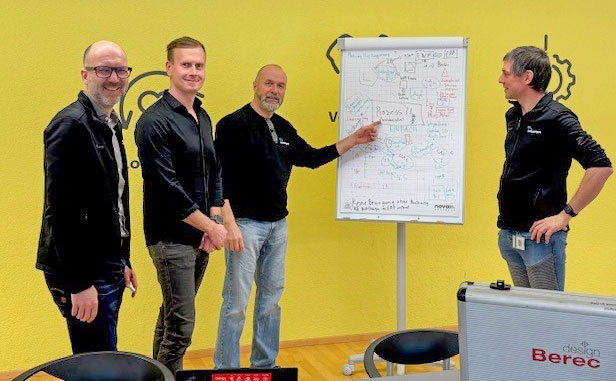 Definition of the first pilot projects with Brütsch/Rüegger Tools.
Source: Brütsch/Rüegger Tools
Definition of the first pilot projects with Brütsch/Rüegger Tools.
Source: Brütsch/Rüegger Tools
A particular focus is placed on goods receipt and dismantling. Goods movements and the associated information flows are currently being analysed in detail in order to derive a standardised, practical goods flow from them. Existing processes are not being completely replaced, but selectively developed further.
In the third phase, which has already started, three pilot areas have been defined. These are now being analysed and optimised step by step.
The first pilot focuses on tool provision in manufacturing. The aim is to make tools and equipment available in such a way that search times are reduced and workflows become simpler. “Employees should not have to search for what they need, but be able to get straight to work,” says Reto Krebs.
Another pilot project focuses on consumables. The aim here is to create greater transparency regarding demand, stock levels and replenishment in order to increase supply reliability.
The third pilot concerns internal goods flows. Defined storage locations, clear labelling and shorter routes are intended to make processes more efficient and easier to trace. At the same time, the ERP processes are also being further developed in order to better link orders and material flows.
In the hotel area, for example, testing is underway to see how orders can be bundled via a central platform. Employees enter their requirements in a standardised shopping basket, while the orders are automatically forwarded in the background to the relevant suppliers – digitally or by e-mail, depending on the provider. “The idea is that orders can be triggered directly in the system,” explains Reto Krebs. “In the background, the process then continues in a standardised way.”
The pilot projects are used to gather experience, evaluate findings and further develop practical solutions. The focus is not on the method itself, but on everyday collaboration. Employees are actively involved in the analysis and implementation and contribute their experience directly to the further development of the processes.
“The best ideas come directly from the workshop,” says Marcel Dörr. “What matters is that we pick them up and develop them together.”
At Grimsel Hydro, lean is therefore not understood as a short-term project, but as a continuous development process. The aim is to make processes more transparent, more efficient and more practical over the long term – supported by the employees themselves.
Collaboration with a view to the future
The collaboration between Grimsel Hydro and Brütsch/Rüegger Tools continues to develop – increasingly beyond traditional procurement. Topics such as process design, material flows and workplace organisation are becoming more and more important.
“It is about developing solutions together that work in the long term,” says Reto Krebs. Single sourcing is understood as part of a broader approach that combines efficiency, quality and flexibility. The focus is on the continuous development of existing processes – practical, step by step and with a clear focus on everyday work.
Conclusion
With Grimsel Hydro, Kraftwerke Oberhasli AG has a centre of expertise for maintenance and manufacturing that has grown over decades.
The further development of procurement, material and process workflows shows how Grimsel Hydro is deliberately questioning existing structures and optimising them in a practical way. The pilot projects that have been launched create greater transparency, clearer processes and better support in everyday work.
“In the end, it is about ensuring that the processes work for everyone,” Marcel Dörr sums up.
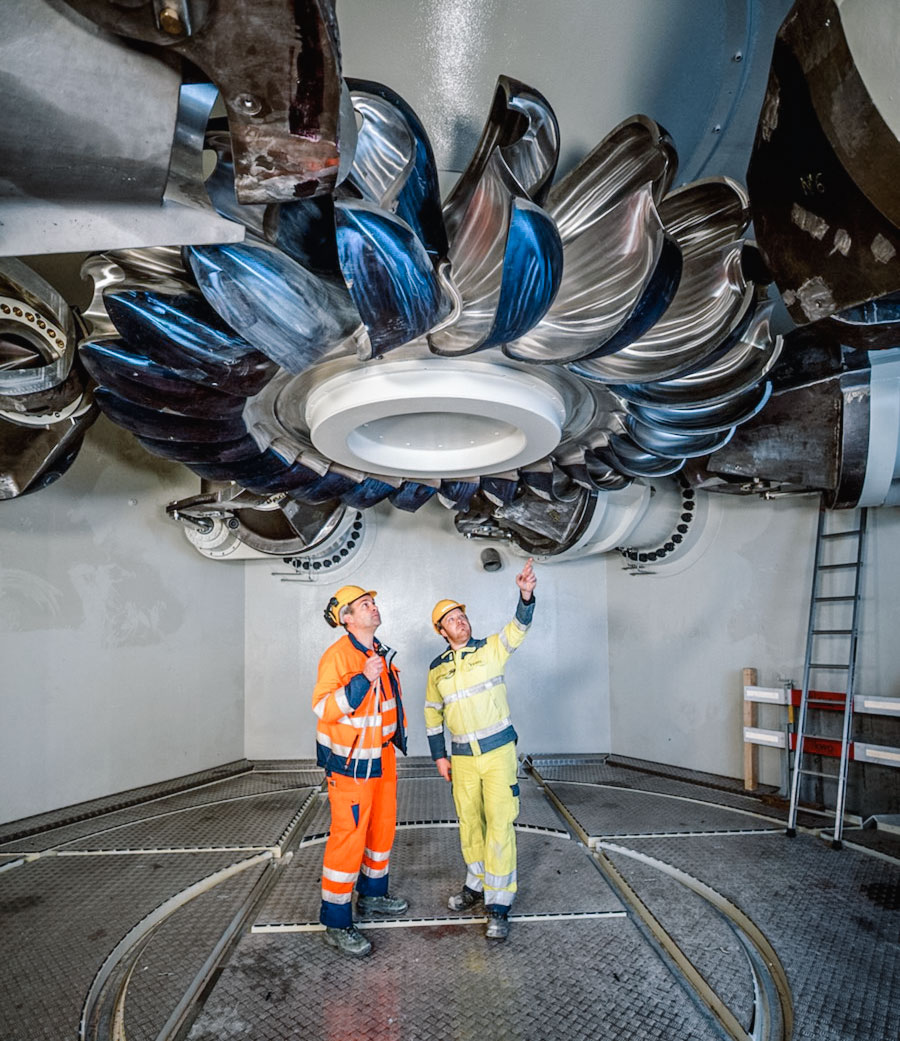 Turbine inspection at Grimsel Hydro.
Source: Brütsch/Rüegger Tools
Turbine inspection at Grimsel Hydro.
Source: Brütsch/Rüegger Tools