
Work with purpose: at Campus Technik, nothing is made just to be thrown away
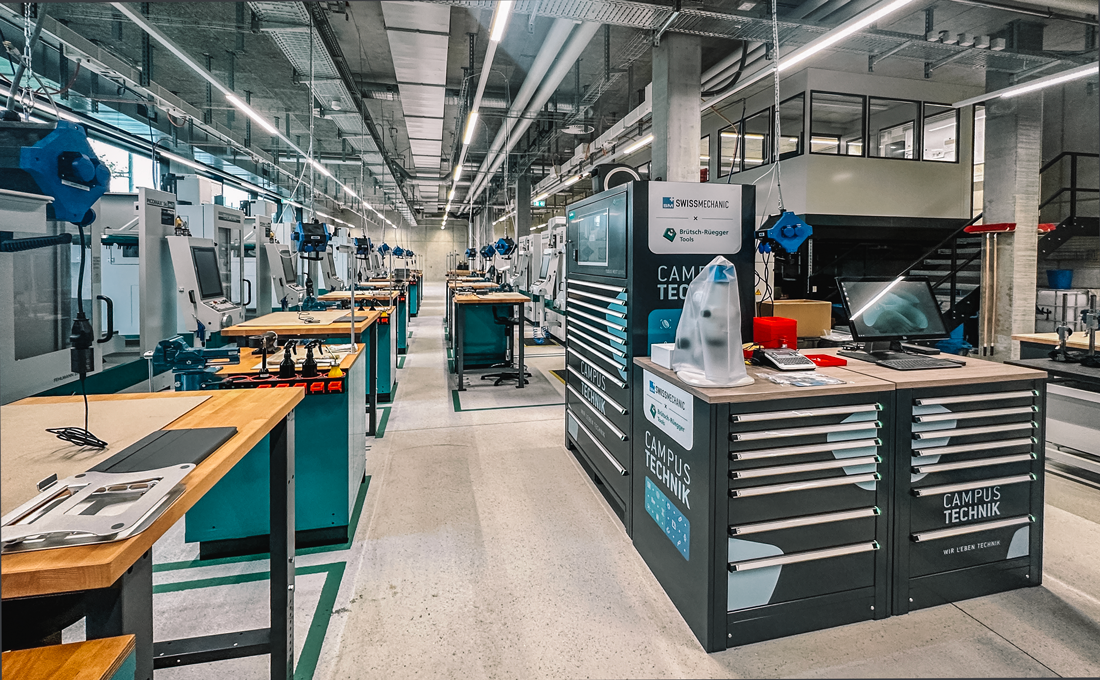 Campus Technik: tomorrow’s skilled professionals learn under optimal conditions. (All images: Josua Lai)
Anyone aiming to train young people successfully today needs to understand how they learn and what motivates them. Jan Sutter, Head of Training at Swissmechanic Solothurn and a member of the national association’s commission for basic vocational training, speaks from extensive experience: over the past eleven years, he has supported more than 800 apprentices. This long-standing, hands-on work has given him valuable insights into how to develop the skilled professionals of tomorrow in a purposeful and sustainable way. At Campus Technik, he applies this experience consistently across both initial and continuing training.
In Grenchen, Sutter is pursuing an ambitious plan: he wants to engage what he calls the “screen generation” effectively and inspire young talents with an innovative learning and teaching concept for technical professions. Put simply, the core idea is this: instead of focusing primarily on classic teacher-centred instruction, apprentices at Campus Technik are encouraged to engage actively with the subject matter, ask questions and develop their own solutions. This makes learning more interactive, strengthens attention and increases participation. At the same time, content is delivered in smaller, more manageable learning units.
Part 3 of the series: “Lighthouse project for the STEM sector”
In the first two parts of our series, we presented Campus Technik as a hub of expertise for the STEM sector (known in German as MINT) and introduced Swissmechanic Solothurn as the driving force behind the training facility. In this final instalment, we turn to the core of what makes the campus distinctive – its educational approach, the “engine room” of modern training. Because even the best machines and the most impressive architecture achieve little if training methods are still rooted in the past. With Campus Technik, Swissmechanic is deliberately taking a different approach.
New times, new challenges
Why is this approach increasingly important? Jan Sutter has observed a fundamental shift in vocational training in recent years: “Young people today bring a very different set of experiences than my generation did. Back then, we spent much more time in the physical world – practical understanding developed naturally. Today, much of young people’s everyday experience is flat and digital.” This change can affect manual dexterity and the ability to concentrate for longer periods. Campus Technik’s response is not to lower standards, but to adapt the way complex topics are introduced.
“If young people are to engage with demanding technical content, we need to present it in a digestible way and with strong visual support. You need to earn attention,” Sutter explains.
Even more important than the “how” is the “why”. Traditional hierarchical instructions without context are no longer effective. “In the past it was often simply ‘Do this.’ Today, apprentices rightly ask: ‘Why are we doing it this way? What is the objective?’” Purpose has become a key driver. The educational concept at Campus Technik therefore emphasises transparency and the “push & pull” principle: apprentices are challenged (push), but they must also take responsibility and actively engage (pull) in order to progress. Practical application and experimentation are integral parts of learning.
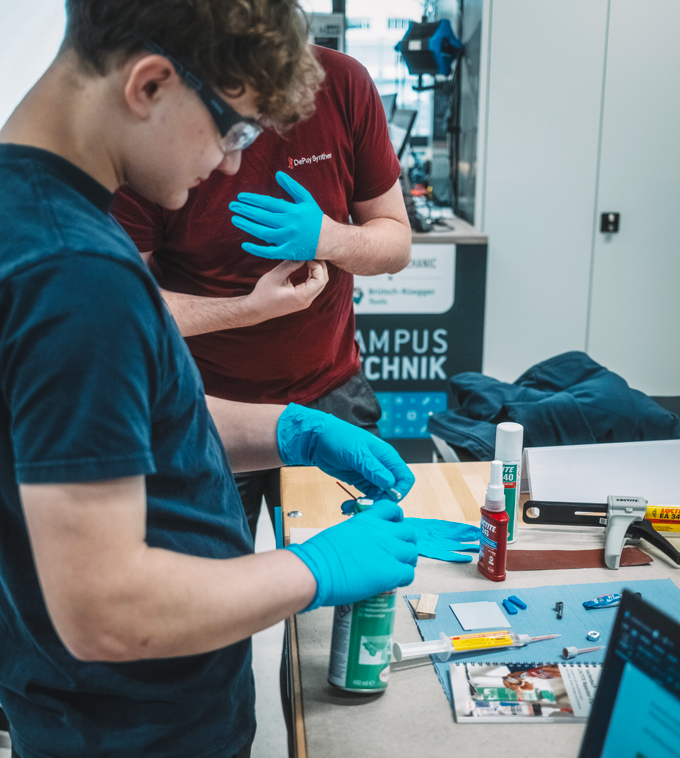 At Campus Technik, young talents learn directly on the workpiece.
Nothing is made just to be thrown away
Anyone who has completed a mechanical or technical apprenticeship is familiar with this scenario: in many training workshops, apprentices spend weeks filing and milling practice pieces that are assessed and then discarded. At Campus Technik, the goal is different. “We want to move away from practice pieces that are ultimately thrown away. Our vision is that apprentices should already make a real contribution during their training,” says Sutter, who designed the innovative and flexible workshop layout in Grenchen himself.
The objective for next summer is ambitious: the campus workshop is to mirror a manufacturing company as closely as possible. To achieve this, roles are defined, and the campus itself acts as an internal client. Apprentices will produce functional products, semi-finished components or small batches – for example five to ten pieces – that follow real quality standards and requirements. “Training and production objectives often compete with each other. We bring them together.”

Agility for demanding times
This new “education management system”, which already supports the 2026 education reform, also creates tangible benefits for Swissmechanic member companies. Enzo Armellino, Managing Director of Swissmechanic Solothurn, sees it as a strategic lever: “Skilled professionals trained here at Campus Technik – independent, purpose-driven and practice-oriented – enable agile companies. And that agility is exactly what our companies need to succeed even in difficult conditions.” The system relieves pressure on training companies while raising the baseline quality of graduates. It also demonstrates that modern vocational training is more than a cost factor – it is a meaningful investment in Switzerland as an industrial location.
Campus Technik in Grenchen shows that the skills shortage is not an inevitability. But it does require active, long-term commitment – supported by technology, expertise and the right partners.

A tool partner with a long-term perspective
Based on the new learning environment – designed to reflect real production as closely as possible – “series parts” are expected to be manufactured at Campus Technik in the near future. Polymechanics, mechanical practitioners, production mechanics and automation technicians also build the necessary expertise by working with state-of-the-art digital solutions for tool management and quality assurance.
This is where Brütsch/Rüegger Tools supports Campus Technik: based on their production orders, apprentices obtain the right raw material and the right tools via the on-site ToolBox solutions. Thanks to stored tool lists for each component, apprentices receive structured support early in their training when selecting suitable tools for each operation. “This allows young professionals to experience in practice how automated ordering supports reliable material availability in a simple and effective way,” explains Olaf Sprich, Head of Sales and member of the management board of the leading tool partner.
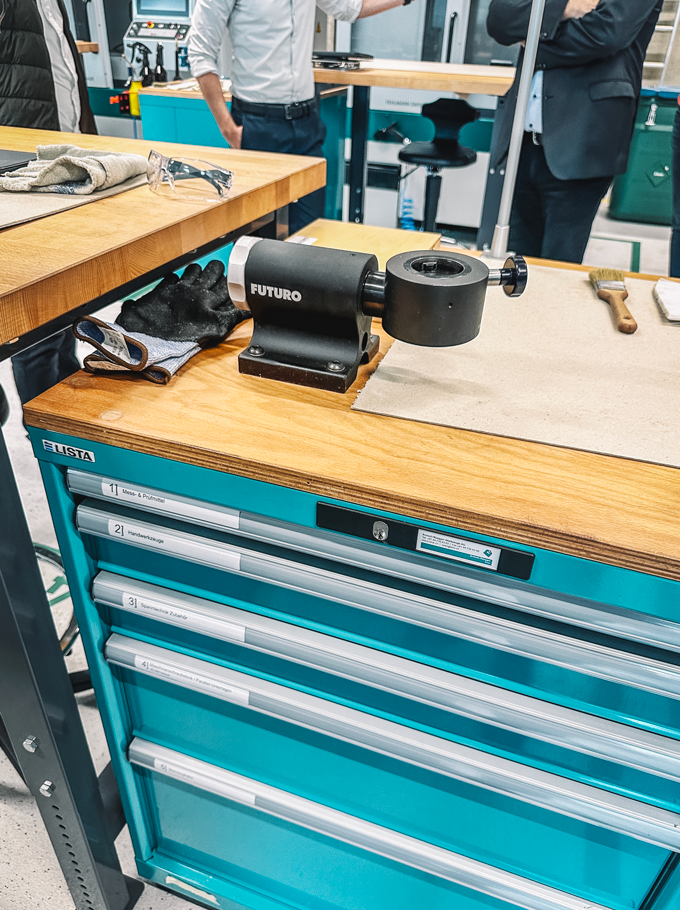 Fully equipped: Brütsch/Rüegger Tools has outfitted all workstations in the apprentice workshop.
Based on the new learning environment – designed to reflect real production as closely as possible – “series parts” are expected to be manufactured at Campus Technik in the near future. Polymechanics, mechanical practitioners, production mechanics and automation technicians also build the necessary expertise by working with state-of-the-art digital solutions for tool management and quality assurance.
This is where Brütsch/Rüegger Tools supports Campus Technik: based on their production orders, apprentices obtain the right raw material and the right tools via the on-site ToolBox solutions. Thanks to stored tool lists for each component, apprentices receive structured support early in their training when selecting suitable tools for each operation. “This allows young professionals to experience in practice how automated ordering supports reliable material availability in a simple and effective way,” explains Olaf Sprich, Head of Sales and member of the management board of the leading tool partner.
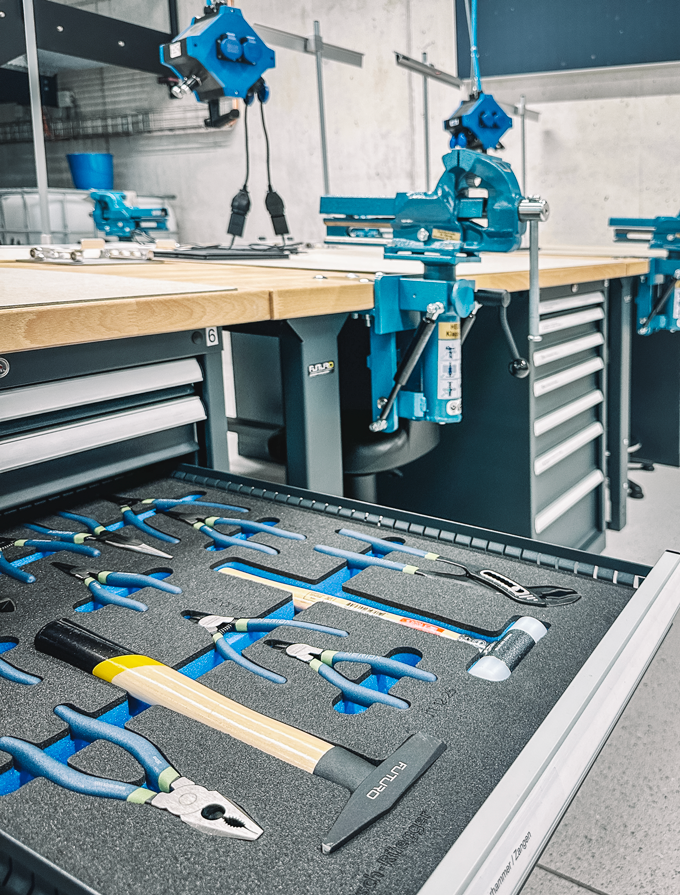 Order matters: tool foam inserts help ensure tools are returned correctly.
Practice-oriented learning with direct industry relevance
Brütsch/Rüegger Tools has supported Campus Technik’s vision from day one. In addition to tools and software, it also provides practice-oriented learning content. One example is the hands-on workshop in joining technology. It was tailored to apprentices’ needs and follows a didactically and methodologically sound structure: short, focused theory units are deliberately combined with practical applications, allowing knowledge to be applied and reinforced immediately.
“To teach this specialist field at a high and up-to-date level, our training team received technical training from our partner HENKEL AG,” explains Sergej Steiner, Technical Advisor at Brütsch/Rüegger Tools. The training took place directly with the manufacturer in Düsseldorf and served to build robust expertise in bonding and joining – which is then passed on to apprentices.
Why is this important? “Because adhesive technologies are becoming increasingly relevant,” Steiner emphasises. It is therefore essential that future skilled professionals develop a solid understanding of these technologies at an early stage. With the expertise gained from the manufacturer training, this knowledge can be taught in a practical, accessible and future-oriented way.
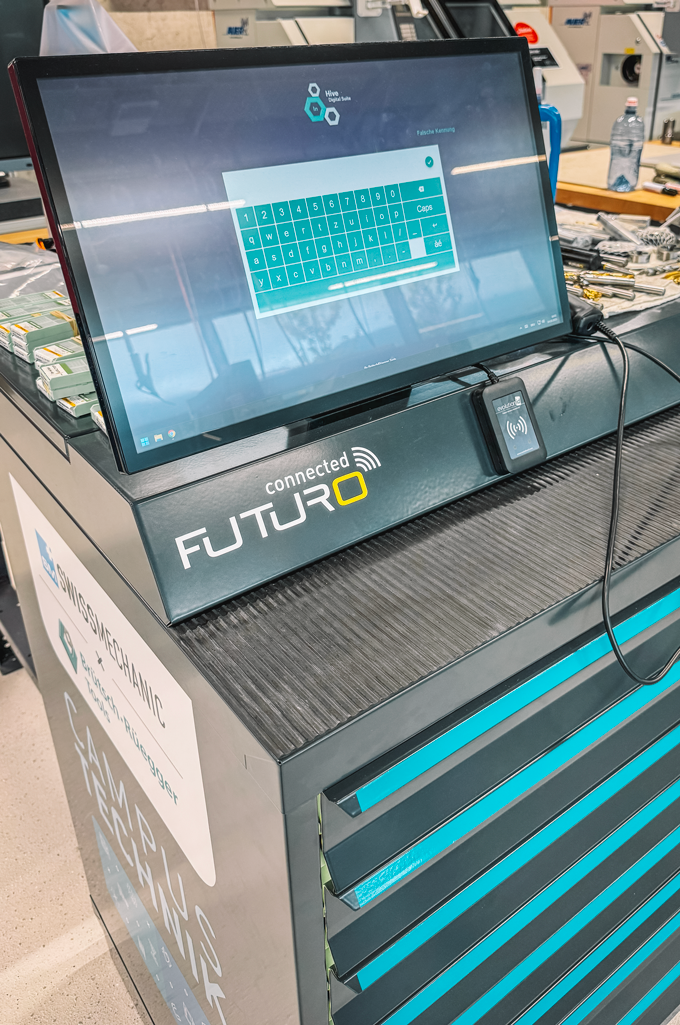 At Campus Technik, working with digital technologies is part of everyday training.